Technical parameters in this guide are project-specific and have not yet been confirmed by specialist review. Confirm materials, structure, lighting and electrical details with our engineering team before specifying.
What this guide answers
How do you plan the daytime form and nighttime appearance of an illuminated sculpture?
Key takeaways
- Develop the metal form and lighting concept together. Pose, openings, reflective surfaces and viewing distance all affect how the finished piece will be perceived.
- Select the intended lighting approach before fixing the internal layout. Outline lighting, internal illumination and external accents need different positions and interfaces.
- Review a representative lit sample and plan maintenance access. The photographed Shentie TOD deer provide a blue-outline reference; each new design needs its own finish and lighting approval.
When to choose what
The silhouette is the main night feature
Discuss outline lighting and check how the route follows the body and antlers from the intended viewing positions.
The surface or openwork should glow
Review the light positions, visible openings and internal space together with the metal geometry.
From our factory
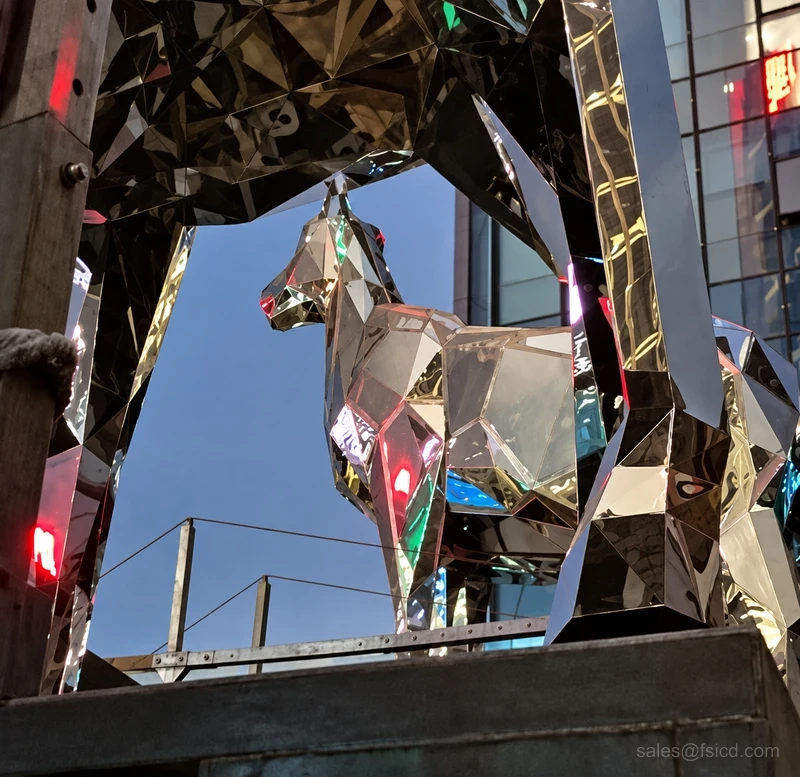
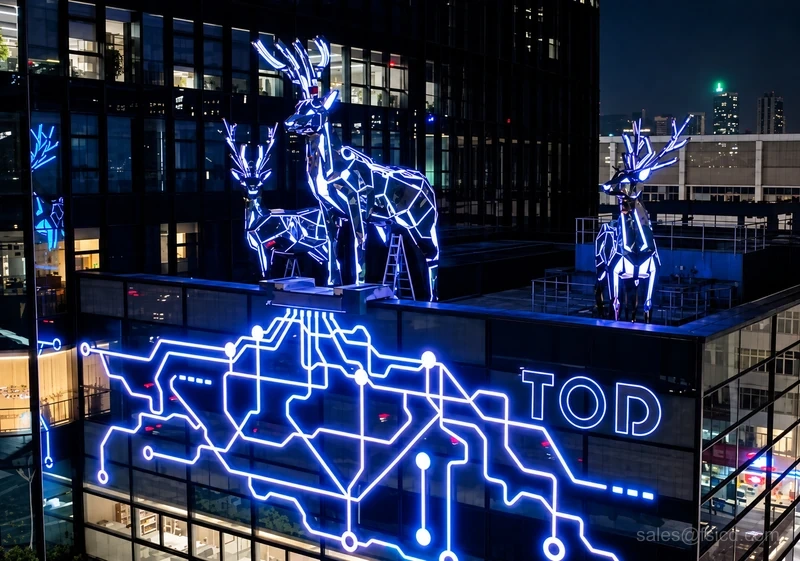
Illustrative review: compare the proposed deer outline in daylight with the lit sample after dark. Record changes to the antlers, light route and base access in the same drawing revision before the complete group is released.
Checklist
- Overall dimensions, pose and group layout
- Daytime finish sample or reference
- Night-effect reference and intended viewpoints
- Light, cable and power-equipment locations
- Lit-sample approval and maintenance access
Related products & services
Illuminated Metal Sculptures
Full Details → →
Metal & Lighting Integration
Full Details → →Discuss your project
Full Details → →More guides on this topic
Planning an illuminated sculpture?
Send day and night reference images with your size and site details — we reply within 24 hours with feasibility feedback and next steps.
Discuss your project